Groen: A Modern, Geometric Display Font for Distinctive Design
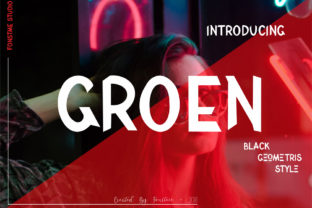
Groen is a display font that stands out for its modern, geometric aesthetic and its carefully crafted design. Unlike many fonts that follow traditional or historical styles, Groen was designed with a contemporary edge, making it ideal for projects that require a bold and original visual identity. Its clean lines and structured form offer a fresh alternative to more conventional typefaces, appealing to designers who want to make a strong typographic statement.
What sets Groen apart is its balance between simplicity and character. The font maintains a sense of clarity while incorporating subtle details that give it a unique personality. This combination makes it versatile enough for a range of applications, from branding and editorial design to digital interfaces and signage.
What Makes Groen Unique?
Groen’s design is rooted in geometric principles, which means its letterforms are based on shapes like circles, squares, and triangles. This approach gives the font a consistent and cohesive look, ensuring readability even at smaller sizes. However, unlike some purely geometric fonts that can feel rigid or impersonal, Groen adds a layer of sophistication through its nuanced strokes and spacing.
The font’s structure allows for both contrast and harmony. For example, the uppercase letters often feature sharp angles and minimal serifs, while the lowercase letters maintain a level of fluidity that prevents the overall design from feeling too cold or mechanical. This duality makes Groen adaptable to different design contexts, whether the goal is to convey professionalism, creativity, or innovation.
Comparing Groen to Similar Fonts
When considering alternatives to Groen, it’s helpful to understand how it fits within the broader category of geometric display fonts. Fonts like Futura, Helvetica, and Bebas Neue share some similarities, but each has its own distinct characteristics. Futura, for instance, is known for its clean, modern appearance and widespread use in corporate and editorial settings. While it offers a similar geometric foundation, it lacks the edginess and individuality that define Groen.
Fonts such as Bebas Neue are also popular for their bold, no-nonsense style, but they tend to be more limited in terms of weight variations and stylistic options. Groen, by contrast, provides a wider range of weights and styles, allowing for greater flexibility in design projects. This makes it a more comprehensive choice for those looking for a single font that can serve multiple purposes.
Another key difference lies in the font’s application. While many geometric fonts are best suited for headings and logos, Groen’s design supports a broader range of uses. It can be used effectively in body text when paired with complementary typefaces, offering a level of versatility that some competitors do not provide.
Strengths and Best-Fit Situations
Groen excels in scenarios where a strong visual presence is needed. Its bold, geometric structure makes it an excellent choice for branding, especially for businesses that want to project a modern, innovative image. It works well in logos, headlines, and other prominent typographic elements where legibility and impact are essential.
The font is also well-suited for digital interfaces, such as websites, mobile apps, and user dashboards. Its clean design ensures that it remains readable on screens of varying sizes and resolutions, making it a practical option for web and app development. Additionally, its structured form helps maintain visual consistency across different platforms and formats.
In editorial design, Groen can add a distinctive touch to magazines, posters, and other printed materials. Its ability to command attention without overwhelming the reader makes it a valuable tool for designers looking to create visually engaging layouts.
Tradeoffs and Limitations
While Groen offers many advantages, it may not be the best fit for every project. Its bold, geometric style can be overpowering in certain contexts, particularly when used in long blocks of text. In such cases, pairing it with a more neutral typeface can help balance the design and improve readability.
Another consideration is the font’s availability. Unlike widely used fonts such as Arial or Times New Roman, Groen may not be as readily accessible in all design software or platforms. This can be a limitation for users who need to ensure compatibility across different systems or who work with clients who have specific font requirements.
Additionally, the font’s distinctive style may not align with all brand identities. For organizations that prioritize tradition, conservatism, or subtlety, Groen could come across as too aggressive or unconventional. In these cases, a more classic or minimalist font might be a better match.
When Groen Is the Right Choice
Groen is a strong choice for projects that benefit from a modern, eye-catching design. If the goal is to create a memorable brand identity, a dynamic website layout, or a striking print piece, Groen can provide the visual impact needed to stand out. Its geometric structure and clean lines make it particularly effective in tech-related industries, creative agencies, and startups that want to convey innovation and forward-thinking values.
For designers working on projects that require a fresh, original look, Groen offers a compelling alternative to more common fonts. Its ability to blend structure with personality makes it suitable for a wide range of creative applications, provided it is used thoughtfully and in the right context.
When to Consider Alternatives
If the design requires a more subdued or traditional appearance, other fonts may be more appropriate. For example, a serif font like Georgia or Garamond could be a better fit for a publication that emphasizes readability and timelessness. Similarly, a sans-serif font like Roboto or Open Sans might be preferable for a website that prioritizes clarity and accessibility.
For projects that demand a high degree of customization or support for multiple languages, a more extensively developed font family might be necessary. Some fonts offer a broader range of glyphs, ligatures, and language-specific features, which can be important for international audiences or complex typographic needs.
Conclusion: Evaluating Groen for Your Needs
Groen is a distinctive and well-crafted display font that offers a modern, geometric aesthetic with a strong visual identity. Its balance of structure and character makes it suitable for a variety of design applications, from branding to digital interfaces. However, its bold style may not be appropriate for every project, and its availability and compatibility should be considered before finalizing its use.
Ultimately, the decision to use Groen depends on the specific goals of the design. By understanding its strengths, limitations, and best-fit situations, designers can determine whether it aligns with their vision and meets the needs of their audience. Whether it’s the right choice or not, Groen represents a thoughtful and original approach to typography that can add value to the right project.